How AI Writes Verified SEO Content Without Overpromising
Discover how AI writes verified SEO content by separating drafting from evidence checks, ensuring every factual claim is source-backed.

Mike Du
Founder, SiteSeed
· 6 min read
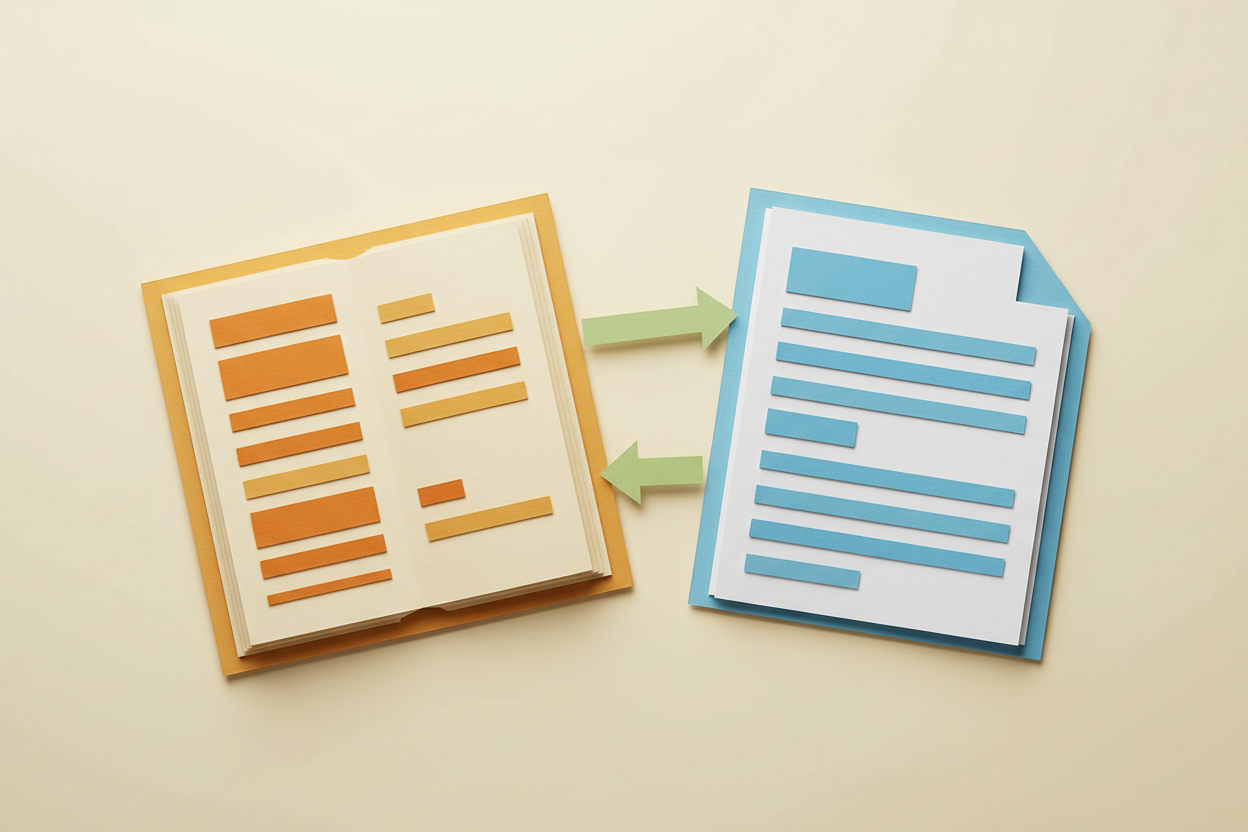
How AI writes verified SEO content starts with one rule: the draft and the evidence check are two separate jobs, and no factual claim reaches your CMS until it traces to a source. Drafting is fast. Checking is where accuracy comes from.
What verified AI SEO content actually means
Verified content isn't content that "sounds right." It's content where every factual statement has been looked at on its own, not waved through as part of one smooth block of text.
The process begins when the system flags each factual statement in the draft. A date, a number, a comparison, a claim about how something works: each one gets pulled out and listed. The rest of the article, the explanations and advice, stays as writing. The flagged claims become a checklist.
Next, each flagged claim is checked against an authoritative source. The AI's original wording doesn't count as evidence. Only the source does.
For a small team, this changes the question you ask. You stop asking "does this read well?" and start asking "what backs this sentence?" That's the heart of source backed SEO, and it's the AI verification process we build everything around. It won't make a draft perfect. It does give you a clear, repeatable way to decide what stays, what changes and what goes.
Why AI can still produce unsupported claims
The risk is real, and it has a name. The National Institute of Standards and Technology defines confabulation as a generative-AI system presenting erroneous or false content confidently. The confidence is the problem. A wrong number reads exactly like a right one.
NIST also says confabulations can include outputs that diverge from prompts or contradict statements previously generated in the same context. So the same article may say one thing in paragraph two and something different in paragraph six.
Suppose your draft states a figure in the introduction and quotes a different one near the end. Neither looks suspicious on its own. Only a claim-by-claim check exposes the mismatch.
So treat every factual statement as unproven until a source supports it. Don't read fluent wording as a sign of accuracy.
How AI writes verified SEO content through claim checking
Here's the workflow a small team can run before anything is uploaded. Google Search Central says it is critical to manually fact-check and review all AI-generated content for accuracy and trustworthiness before publishing, and it advises focusing on accuracy, quality and relevance when generating web content automatically.
- List the claims. Pull out every declarative sentence that contains a fact, date or comparison.
- Retrieve sources. Find the most authoritative source for each one.
- Compare wording. Set the claim beside the source text, then keep, qualify or delete the sentence.
- Fix partial support. If the source supports only part of the claim, rewrite it to match the evidence exactly, or cut the unsupported portion.
- Review as a human. Confirm every remaining claim still lines up with its source.

Google's rules on AI-assisted content you must follow
Google Search Central states that using AI gives content no special gains in Search. It also says appropriate use of AI or automation isn't against its guidelines when it isn't used primarily to manipulate rankings. Verification is a quality step, not a shortcut.
The guardrail against scale is explicit. Google's spam policies list generating many pages with generative AI or similar tools, without adding value for users, as an example of spam. Publishing more isn't the goal. Publishing fewer, checked pieces is safer.
Google's ranking systems, according to its helpful content guidance, prioritize helpful, reliable information created to benefit people over content made to manipulate rankings. Google Search Central also identifies clear sourcing, evidence of expertise, and background about the author or publishing site as information that can help people trust an article.
In practice, put your sources on the page and say who is behind the site.
The last checks before you publish in your CMS
Before upload, run a short final gate:
- Read the finished article once more, looking only at the claims and their attached sources, not the surrounding text.
- Ask whether the piece adds original value. Google's guidance asks whether content drawing on other sources avoids simply copying or rewriting them and instead provides substantial additional value and originality.
- Upload only after both steps pass.
If a piece fails the second step, don't patch it with more paraphrasing. Add something only you can offer, such as your own product experience, then run the claim check again.
Frequently asked questions
Does Google penalize content merely because AI helped write it?
No. Google judges the final content against its existing standards, whatever tool produced it. Appropriate use of AI isn't against its guidelines. What gets content into trouble is low value or an effort to manipulate rankings, so focus on whether the page helps readers.
How does source-backed SEO differ from simply adding citations?
Source-backed SEO requires the claim itself to match what the source says. A link at the bottom of a page proves little if the sentence above it overstates the evidence. Compare wording first, then qualify or cut anything the source doesn't support.
What should be checked before AI content is published in your CMS?
Every factual claim needs a check. Match it to a supporting source, qualify it if the evidence is limited, or remove it if nothing supports it. Then have a person read the final version for claims and sources only, before anything goes live.
How can a small team use AI without publishing thin scaled content?
Limit output to topics where you can complete the full verification workflow. Skip anything you can't check properly. Then add original value to each piece, so it's more than a rewrite of existing sources, before you publish it.
Where this leaves you
When you follow the claim-by-claim verification workflow, AI becomes a drafting tool rather than a source of risk, and you keep full control over what reaches your site. No process guarantees every statement is correct, but a visible trail from claim to source gives you something solid to stand on. If you'd like us to run that workflow for your site, you can connect your site to SiteSeed.
Free tools to put this into practice
- Blog Topic Generator
Get 10 blog topics with a target keyword each, ready to preview, illustrate, and write.
- SERP Preview Tool
Preview your page in Google with pixel-accurate warnings, and let AI write the snippet.
- SEO Content Plan Generator
Build a week-by-week publishing plan with target keywords, search intent, and topic clusters.